OpenClone einrichten
Wähle deinen Weg, konfiguriere deine KI und verbinde die Apps. Kostenlos, auf jeder Ebene.
Wähle deinen Weg
Betreibe OpenClone auf deinem eigenen Computer und verbinde dein Smartphone damit. Dein Computer ist dein Server. Lokal zuerst, nichts verlässt deine Maschine.
git clone https://github.com/PixxzR/openclone
cd openclonecp backend/.env.example backend/.env
# Edit .env:
# API_KEY=your-secure-random-key
# AI_PROVIDER=openai
# AI_API_KEY=your-openai-keycd backend
docker compose up -dcurl http://localhost:8000/api/status
# → {"status":"ok","version":"1.0.0"}# In the iOS or macOS app:
# Backend URL: http://your-local-ip:8000
# API Key: (same as API_KEY in .env)Apps installieren
Verbinde die macOS Desktop-App oder die iOS Mobile-App mit deinem Backend. Beide sind signiert und sofort einsatzbereit.
Signed & notarized with an Apple Developer certificate — no Gatekeeper warning, opens like any Mac app.
# https://github.com/PixxzR/openclone/releases
# → OpenClone-x.x.x.dmg# Open the .dmg
# Drag OpenClone.app → /Applications
# Eject the .dmg# Launch OpenClone
# Go to Settings
# Backend URL: http://your-server-ip:8000
# API Key: (same as API_KEY in your .env)
# → tap Connect# Switch to the "macOS Plugins" tab above
# to enable audio capture and screen OCRbrew install --cask openclone KI-Skills
Lege eine Skill-Datei in dein KI-Tool und es weiß, wie es deinen Vault durchsucht, sein Format liest und die API aufruft.
Claude Code Skill
Gives Claude Code full context about your vault structure, file format, and API. Drop it once, use it everywhere.
# OpenClone Memory Vault

## Vault Structure
Audio/YYYY-MM-DD.md  # meetings, system audio
Screen/YYYY-MM-DD.md # screen OCR every 30s
Web/YYYY-MM-DD.md    # browsing history

## Query Examples
Grep "meeting" in Audio/
Read vault/Screen/today.md
Install path:
~/.claude/skills/openclone.claude.md Cursor Rules
Teaches Cursor about the vault layout, file format, source types, and backend API endpoints for your project.
# OpenClone Memory Vault — Cursor Rules

vault/Audio/YYYY-MM-DD.md # audio transcriptions
vault/Screen/YYYY-MM-DD.md # screen OCR
vault/Web/YYYY-MM-DD.md   # web browsing

## API
POST /api/v1/ingest  # write memories
GET  /api/search?q=  # search vault
POST /api/ask/stream # AI query (SSE)
Install path:
.cursorrules (project root) Universal Context
A ready-to-paste context block that explains your memory vault to any AI: ChatGPT, Gemini, Claude web, etc.
# My Personal Memory — OpenClone Context

My vault captures:
• Audio — meetings, conversations
• Screen — OCR of active windows
• Web — sites visited, articles read
• Journal — voice notes

Format: Source/YYYY-MM-DD.md
with ### HH:MM timestamped entries
Install path:
Paste into any AI chat cp openclone.claude.md
~/.claude/skills/ cp openclone.cursorrules
/your/project/.cursorrules Paste the content of
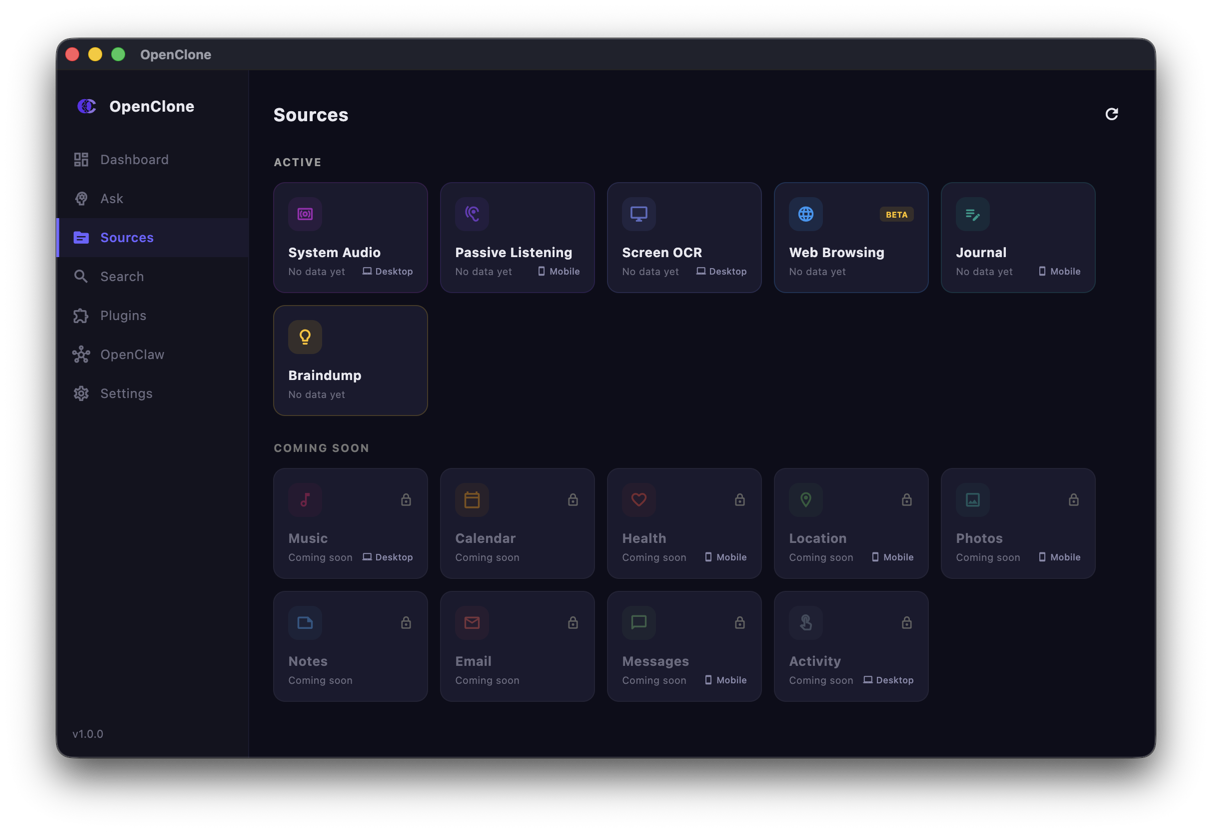
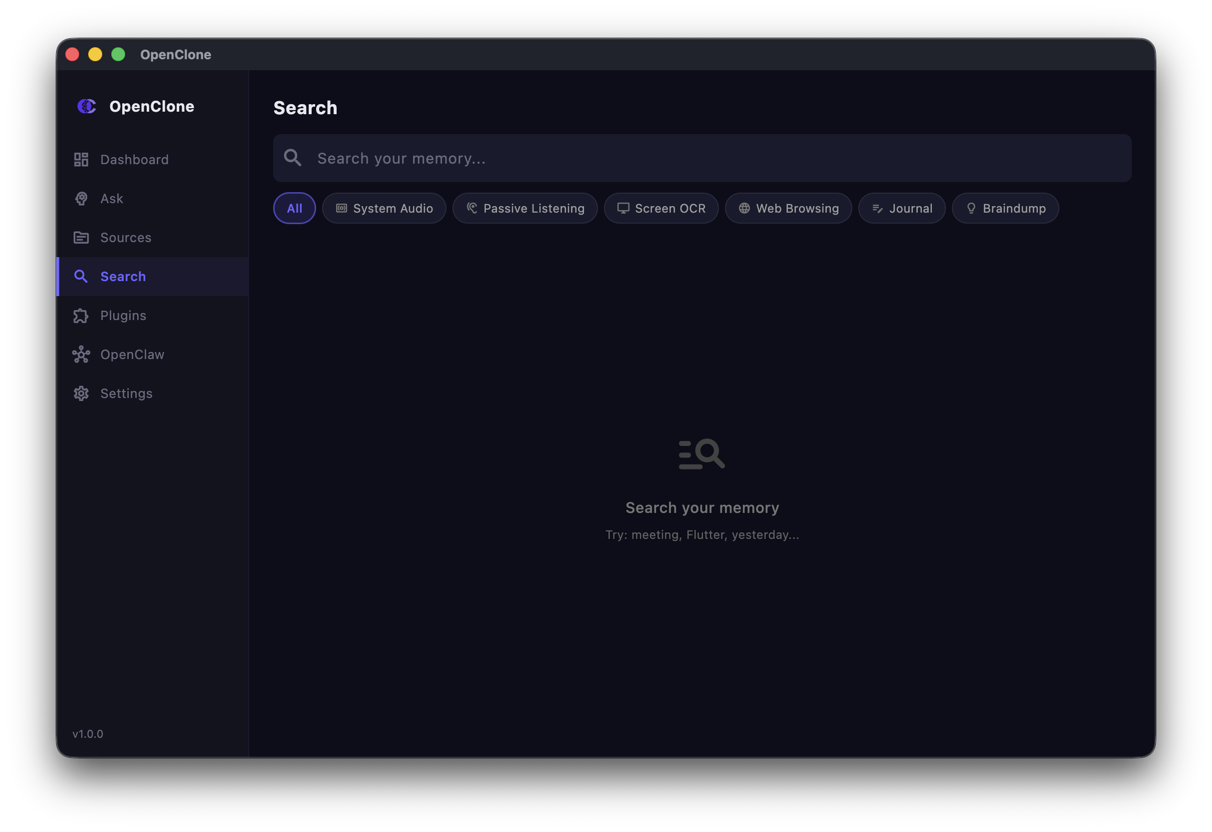
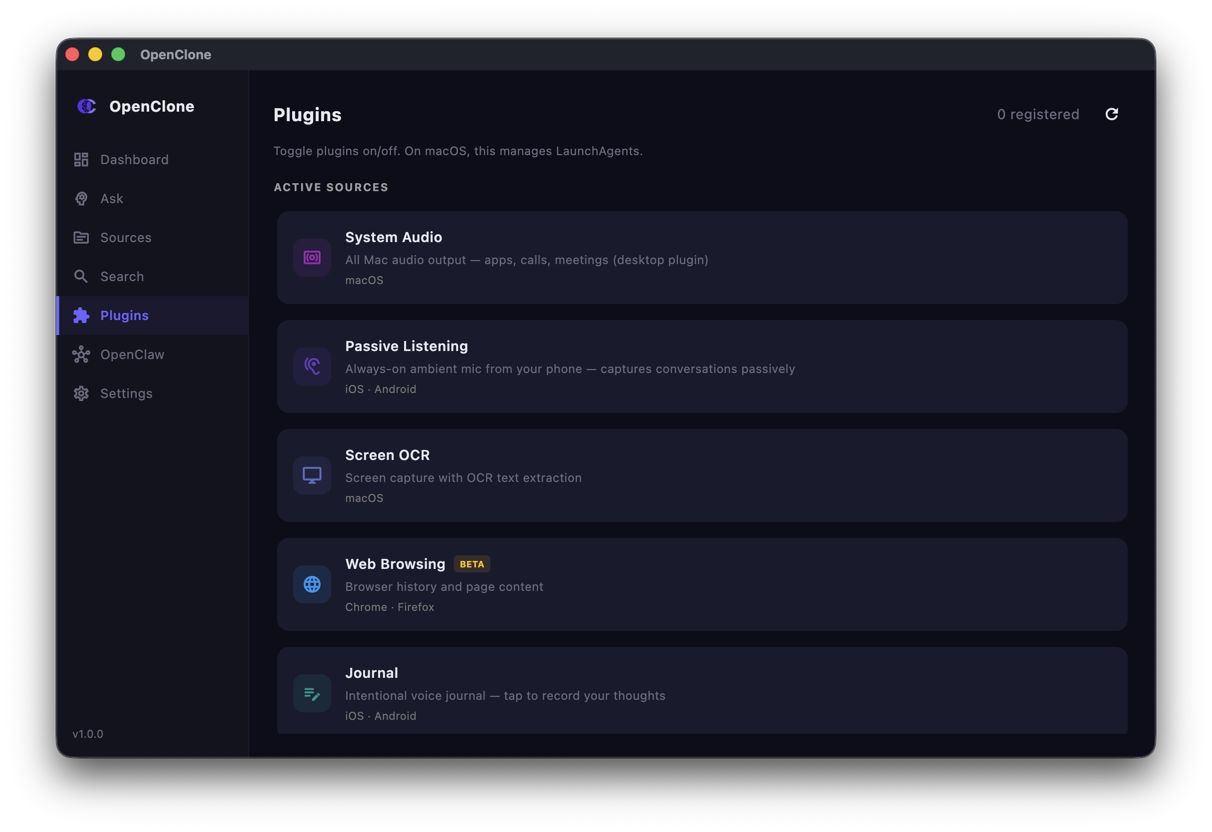
openclone-context.md Entdecke die Apps
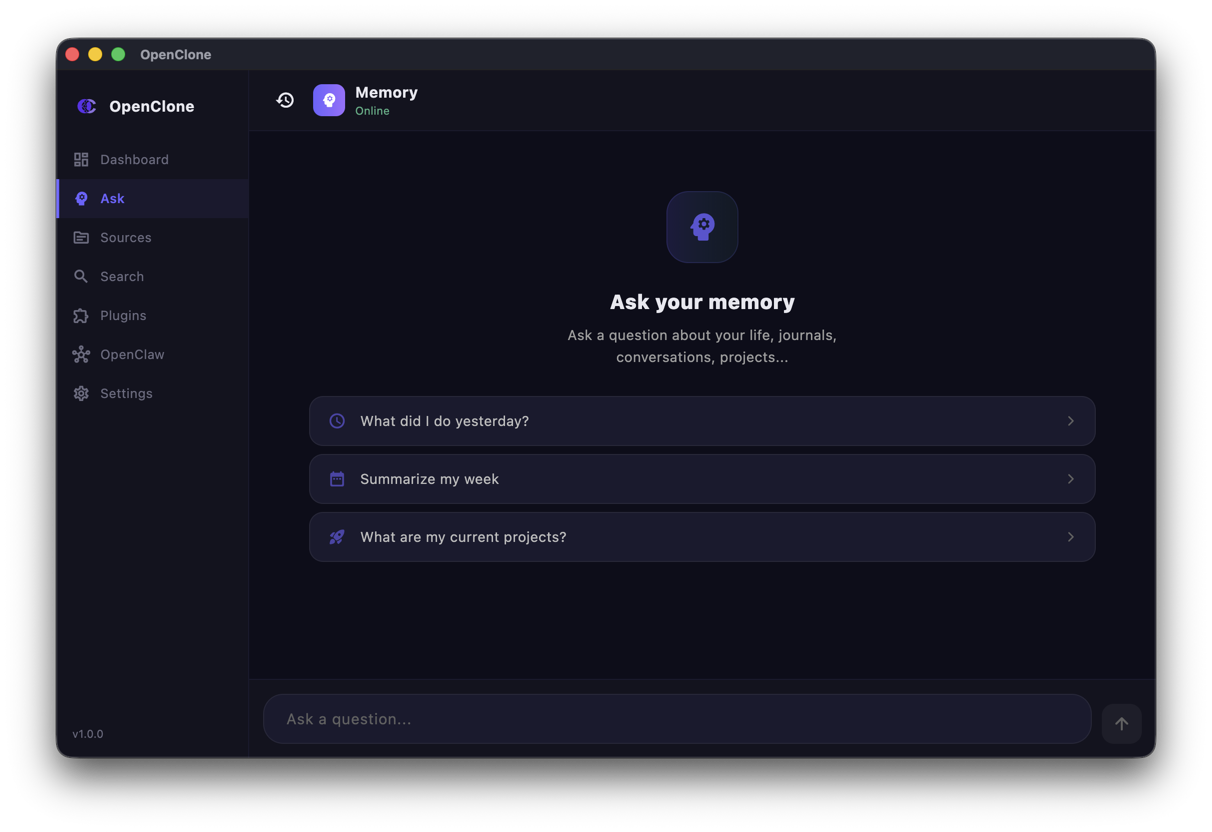
iOS-App und macOS-Desktop-App. Verbinde sie in Sekunden mit deinem Backend.
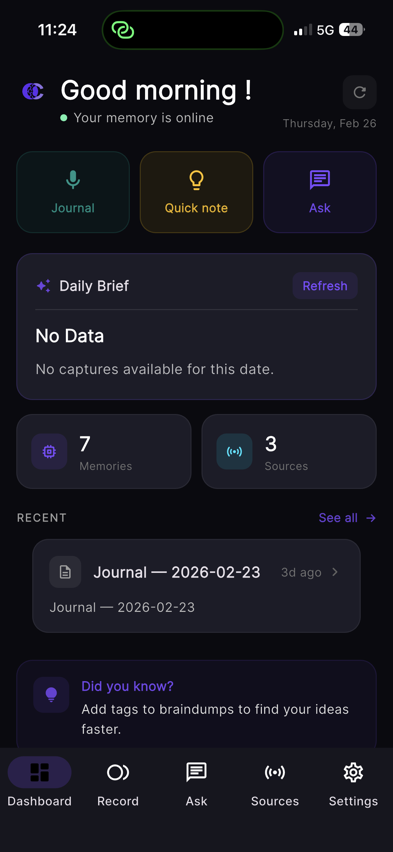 Dashboard
 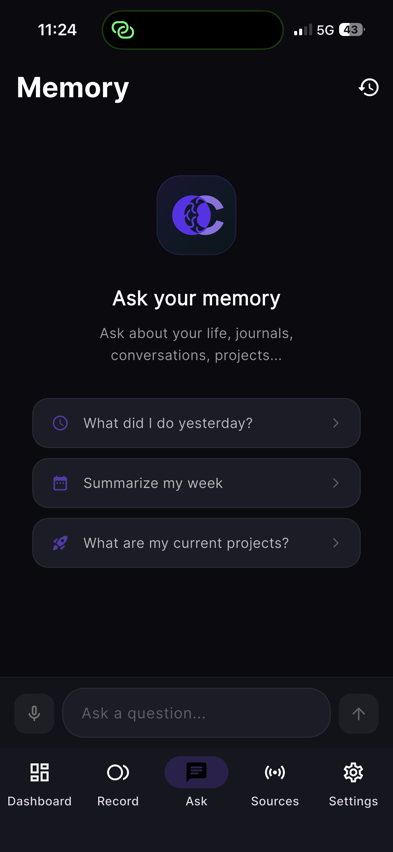 Ask
Ask 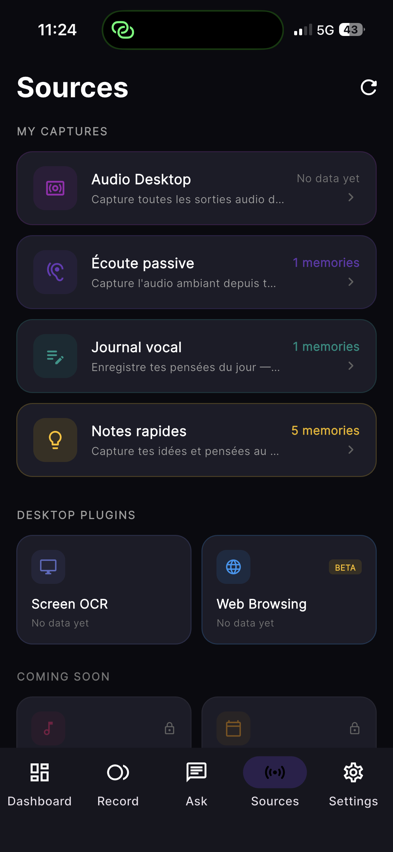 Sources
 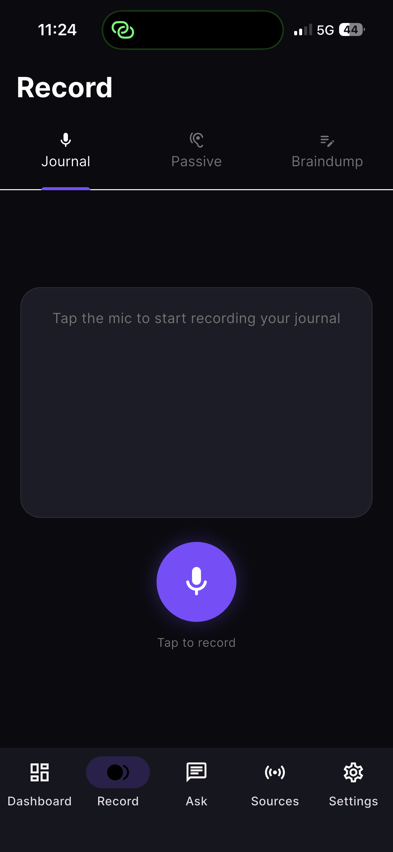 Journal
 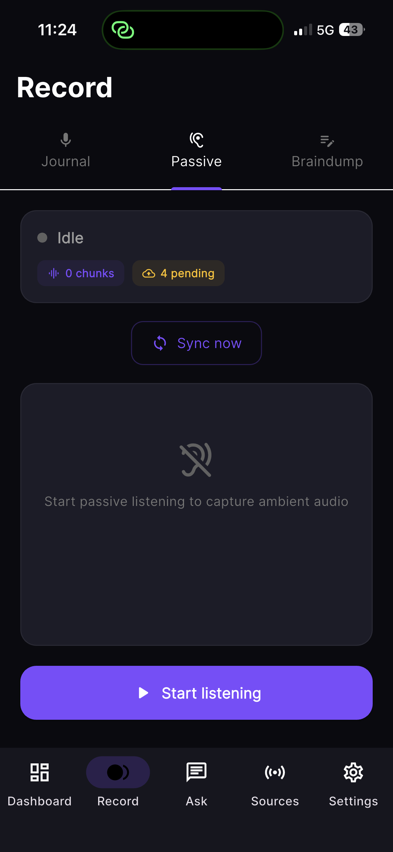 Passive
 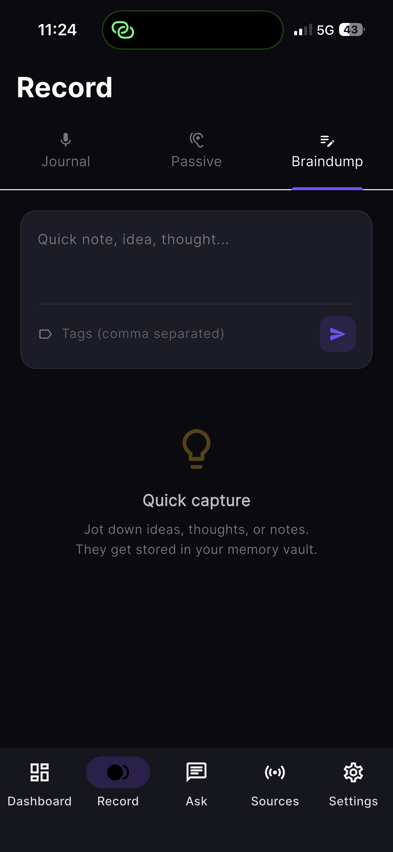 Braindump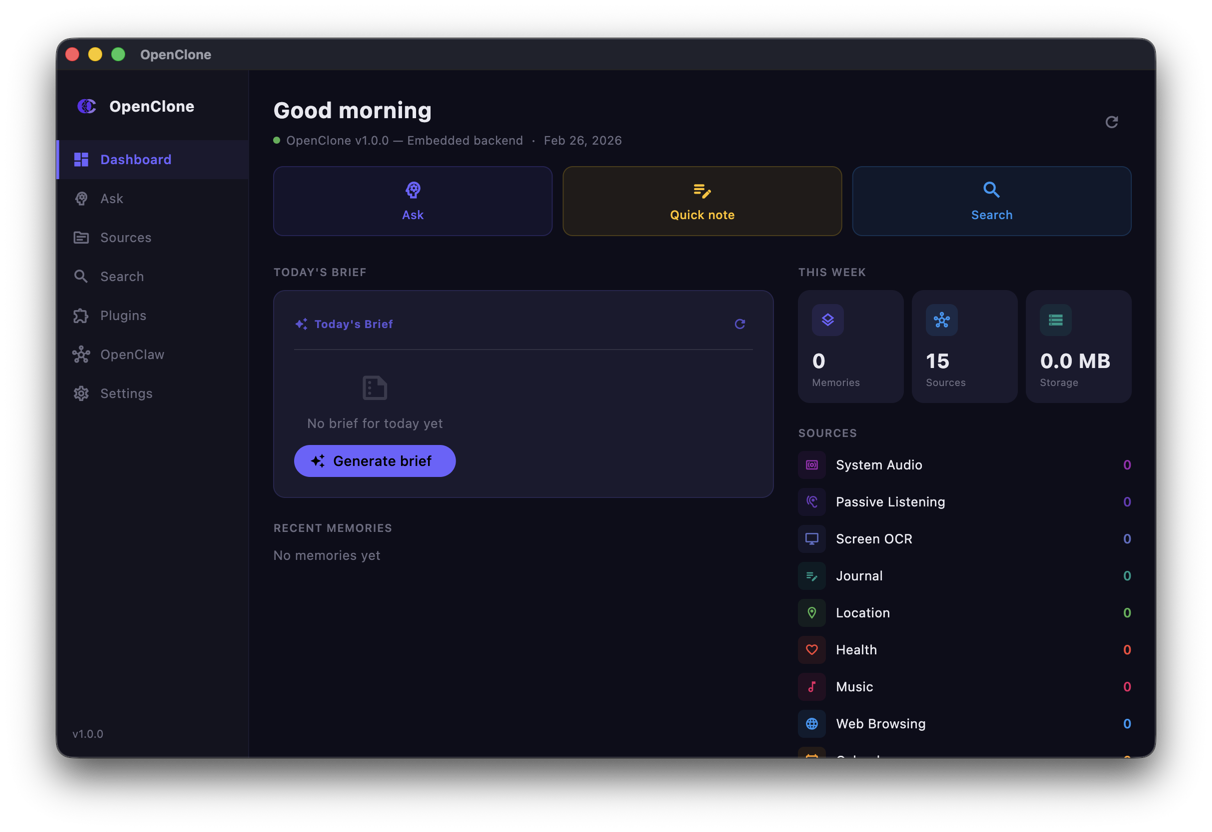
Watch it in action
Short demos of each key workflow — setup, capture, and querying your memory.
Videos to record (replace placeholders) click to expand
Record these short clips and place them in www/public/videos/.
Recommended: MP4 (H.264), max 1080p, 30fps, keep clips under 2 minutes for fast loading.
setup-5min.mp4 ~90s - 1. Start with terminal open, show the git clone command
- 2. cp .env.example .env → open .env in editor, fill API_KEY + AI_API_KEY
- 3. docker compose up -d → show container starting
- 4. curl /api/status → show {"status":"ok"} response
- 5. End: open iOS or macOS app, enter URL + key, show "Connected" badge
demo-ask-cli.mp4 ~60s - 1. Open terminal in vault directory
- 2. Run: claude (or your preferred CLI)
- 3. Ask a question like "What did I work on last week?"
- 4. Show the status events: "Searching Audio/...", "Reading..."
- 5. Show the final streamed answer with memory references
demo-ios.mp4 ~90s - 1. Open app — show dashboard (stats, active plugins, brief)
- 2. Tap Ask — type a question, show typing
- 3. Show status indicator "Searching..." while streaming
- 4. Show full answer with memory references
- 5. Navigate to Memories — scroll through recent entries
- 6. Quick peek at Settings
demo-macos.mp4 ~90s - 1. Show dashboard: vault count, active plugins (audio ●, screen ●)
- 2. Navigate to Ask — type a question
- 3. Show streaming response with "Reading..." status badge
- 4. Navigate to Plugins — show mac-audio and mac-screen running
- 5. Quick settings peek (AI provider, vault path)
Tip: use QuickTime screen recording on macOS, or iOS screen recording from Control Center. Export as .mp4.